

Century College Bridges Knowledge Gaps With Its Additive and Digital Manufacturing Program
News
Educators at Century College know that career readiness involves more than just teaching skills and information; it also means preparing students for the various companies and industries where they can work. The Additive and Digital Manufacturing Program is a great example of a degree that gives students lifelong skills while also introducing them to potential future employers.
“This is a newer two-year degree that was first offered by the college in Fall 2017,” says Randy Jasken, instructor at Century College. “Technology has changed, which means manufacturing has changed, and we need to evolve with it.”
Jasken is actively involved in local high school career and technical education (CTE) programs and meets regularly with local companies. This college connection fosters a pipeline in East Metro MSP from student learners to the employees of tomorrow.
Century College Increases Student Awareness of Manufacturing
Hiring is one of the biggest challenges in manufacturing, with half of companies globally saying they struggle most with talent attraction. Century College is working to build awareness and excitement around the manufacturing industry.
This also comes at a time when more students than ever aren’t sure what they want to do after graduation. One survey found that 44% of students named the same 10 jobs as their career goals, with most saying they want to work in teaching, psychology, and sports.
Jasken has found that most students enroll in manufacturing classes because they are suggested by family members, but he is also seeing demographic shifts. More women are choosing manufacturing pathways as they realize they can apply their design skills and creativity to their work.
“I tell students that if they can use a computer mouse, they can find roles in manufacturing,” says Jasken. “Manufacturing has many skill needs, and they can play to their strengths like problem solving, creativity, and attention to detail to find the best opportunities for them.”
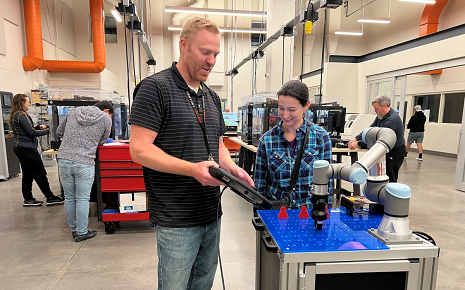
Century College showcases how modern manufacturing uses soft skills like problem-solving, along with technical skills related to various software and programming platforms. Students who complete the Additive and Digital Manufacturing coursework can pursue a variety of careers involving advanced technologies, creativity, and problem-solving.
Additionally, not everyone who completes these classes needs to enter the manufacturing field. For example, there’s a class on 3D printing that many students take for fun, but has become a valuable course for students preparing to work in orthopedics and prosthetics. This is particularly valuable because of the high number of MedTech companies in the Twin Cities.
Century College also offers a new 16-credit digital manufacturing certificate to help students build their skills. A few programs include Orthotics and Prosthetics as well as Dental Assisting, both of which implement CAD and 3D printing.
“Other industries are jumping on the technology because it’s faster and easier to implement,” says Jasken. “Right now it’s an add-on skill, but it will give students a leg up to be hired because they’re ready for an emerging field.”
Jasken Hosts Bi-Annual Teacher Workshops
Century College cannot wait for students to arrive on campus to begin showcasing manufacturing as a career path. Instead, Jasken works with high school teachers through twice-a-year workshops to highlight opportunities to improve CTE and showcase the college’s manufacturing courses.
During the first workshop, high school teachers visit the fabrication lab at Century College to learn about new technology and in-demand skills. They can then apply this information to their high school coursework. During the second workshop, teachers meet at a local high school to see how different districts approach CTE and manufacturing career pathways.
“The most beneficial thing about these workshops is how the instructors network amongst themselves,” says Jasken. “They share tips, lesson ideas, and how to promote the classes to upcoming students. Best practices get shared across schools and districts.”
The College Actively Responds to the Local Workforce
Not only does Century College work to bring students into the manufacturing field, but it also listens to and responds to employers' needs to ensure the content taught in the Additive and Digital Manufacturing program remains relevant.
Any CTE program in the state of Minnesota is required to have an advisory committee, which is comprised of industry leaders who assist faculty in aligning course curriculum with industry needs
“They’re kind of my customers because I’m fulfilling their hiring needs and preparing students to enter their workforce,” says Jasken.
Local employers also support the college by inviting students to see their facilities. Companies in Washington, Ramsey, and Anoka counties host tours so students can see what their future workplaces might be like and the types of jobs in demand.
The goal of Century College is to help students leave high school and develop knowledge and skills that will support them throughout their careers. Strong connections between local schools and companies ensure a smooth transition for students while helping them tap into coursework that’s exciting and modern.
Learn More About the Washington County Workforce
Washington County, Minnesota, is a desirable part of the Twin Cities with an educated workforce. Learn more about the people who live here and the industries where they work. Your organization has a future here with plenty of room to grow. With partners like Century College, you can find qualified candidates with the right skills to succeed.
Have any questions about the region? Don’t hesitate to reach out. We’re here to highlight everything valuable about East Metro MSP.
Photos
More Topics


